

Ji Hye Kim
Ji Hye's Five Rules for How to Make a Delicious Korean Meal at Home

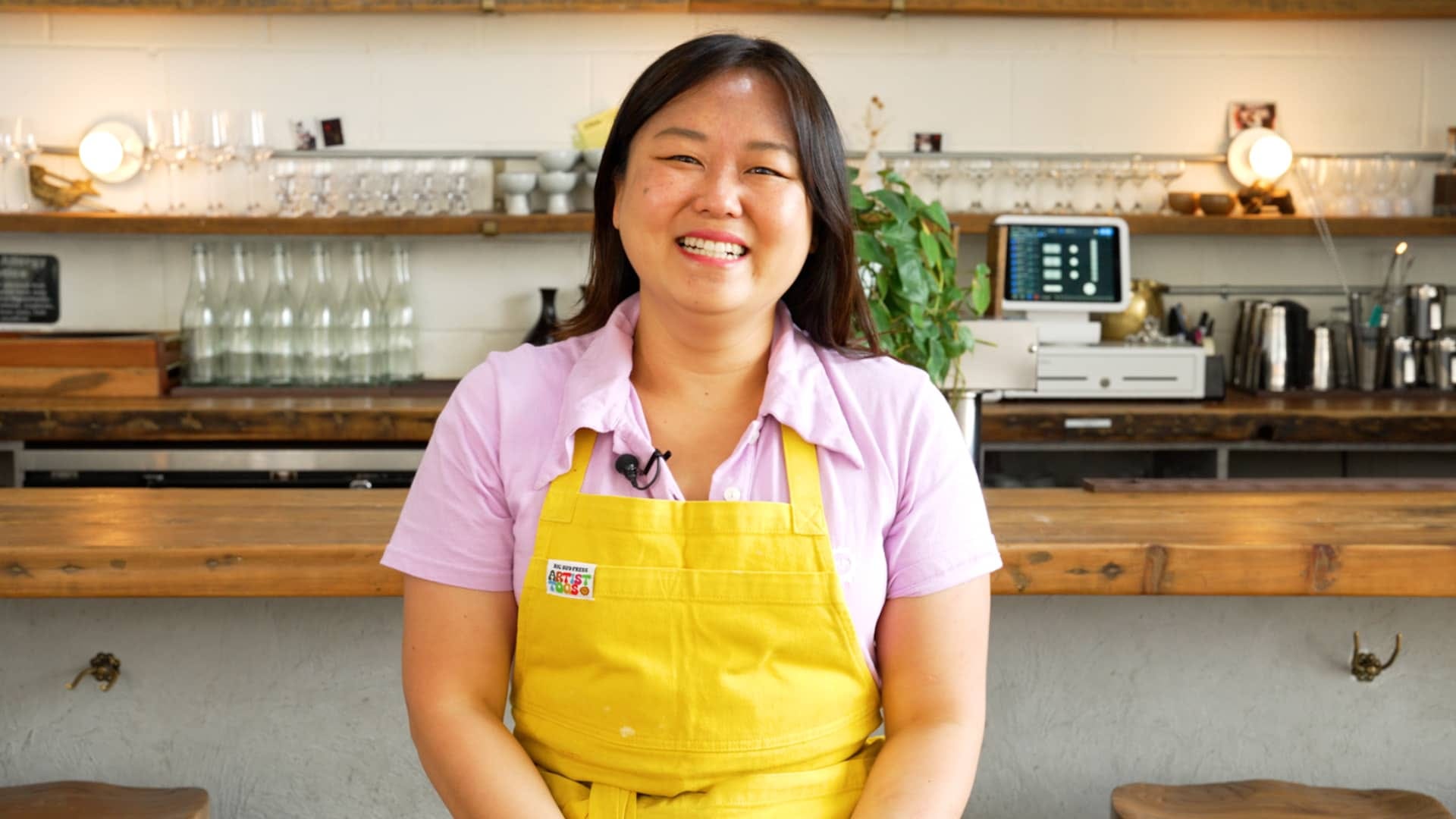
For many home cooks, Korean food is something they love to eat but feel intimidated to make. In this episode, Ji Hye Kim, the chef, owner, and managing partner of Miss Kim and Little Kim in Ann Arbor, shares her Five Rules How to Make a Delicious Korean Meal at Home. She talks about making the cooking feel approachable without stripping away what makes it special. From building a thoughtful pantry to understanding the role of banchan, the stories behind iconic dishes, and ultimately finding the confidence to make them your own, Ji Hye offers a roadmap that is as practical as it is inspiring. Whether you’re making your first batch of tteokbokki or simply looking to bring new flavors into your kitchen, these are lessons that will stay with you long after dinner is over.
I love this episode because it reminds me that learning something new almost always begins with a little uncertainty. Picking up an unfamiliar cuisine asks you to invest your time, your curiosity, and yes, a little money as you stock a new pantry or hunt down ingredients you’ve never used before. But the return on that investment lasts a lifetime. Once you understand the flavors, the techniques, and the stories behind a cuisine, they become part of the way you cook, the way you think, and the way you see the world. Every new dish becomes another connection to another culture, and every meal you make afterward is a little richer because you were willing to take that first step.
Five Rules for the Good Life with Ji Hye Kim
How to Make a Delicious Korean Meal at Home
Hello and welcome to Five Rules for the Good Life. I’m your host, Darin Bresnitz.
Today, I’m in Ann Arbor, Michigan, chatting with Ji Hye Kim, who is the chef, owner, and managing partner of Miss Kim and Little Kim.
She’s here to share her five rules for how to make a delicious Korean meal at home.
She talks about the importance of putting together an essential Korean ingredient pantry, that understanding the essence of a dish elevates what you want to make, and with enough practice, you can make any Korean dish your own.
It is a great conversation for anyone who’s wanted to cook more Korean food at home or has been enticed to introduce new flavors to their cooking at large.
So let’s get into the rules here on HRN.
Growing Up in Seoul
Ji Hye, so nice to meet you all the way from Ann Arbor.
I appreciate you taking the time to chat with me for the show.
I am so excited to be here.
Thanks for having me.
You were born and raised in Seoul.
What are some of the dishes from your childhood that still ground you today?
Oh my god, so many because my mom was the best cook in the family and that reputation has not changed even now.
Even with your own restaurant?
No, absolutely not.
I cannot take the title from her.
She is still the absolutely the best and she cooked everything from scratch.
But what I remember is tteokbokki.
It’s the quintessential Korean street food.
My mom forbade me from eating it because she called it a delinquent food which made me want it more.
Of course.
I remember sneaking out milk boxes and trading it with the street vendor and eating it behind my mom’s back and then coming home for a full Korean meal.
That really stayed with me because it was the first independent decision I made about the food.
I now have three or four different kinds of tteokbokki on rotation at my restaurant at Miss Kim at any given moment.
Those original food memories and adventures always stick with you.
Yeah.
You wound up leaving Seoul and eventually landing in Ann Arbor, getting into the food world through Zingerman’s.
Correct.
What surprised you the most about the culinary offerings of the Midwest?
The amazing array of vegetables.
It’s not necessarily the same vegetables that I would have used if I lived in There are enough similarities and it actually pushes you to be more creative.
Taking what my mother and my ancestors gave me and adapt that with my neighbor farmer’s beets or Jerusalem artichoke or lots of corn.
And that’s actually been really fun marrying that together.
You opened up your first restaurant Miss Kim in 2016 in partnership with Zingerman’s.
How did you want to bring your two worlds together from what you grew up eating with in Seoul and what you discovered in the farms of the Midwest?
I had an office job after graduating.
I just found it incredibly not inspiring.
Sure.
I took a huge pay cut on nothing but a gut feeling.
I started working for Zingerman’s and it’s known for Jewish Reuben sandwiches.
Yes.
What I loved was the cheese I told everybody I got cheese for a living.
It really stayed with me because I would meet a Basque cheese maker who had me taste their one cheese that’s made in different season or age different month.
Really learn about traditional food making and it started having me really wonder what it would be like if I dug in the same way with Korean food.
Really connected with artisans or gave that much thought to the dishes origin story.
That’s how I started looking at Korean food more professionally than just a casual eater.
From what my parents gave me.
From there it slowly morphed into a desire to bring my Korean upbringing and putting roots in Midwestern soil and bring my Korean food to Ann Arbor.
There were Korean food in Ann Arbor before.
I love that you wanted to bring your approach to Korean food to Ann Arbor both in the restaurant and educating people about their favorite dishes and what goes into it which is why I’m so excited for you to share your five rules on how to make a delicious Korean meal at home.
Yeah.
Rule #1: Build a Great Korean Pantry
A lot of the times when you get into a new cultures culinary practices you start by trying to substitute what you already have at home with the ingredients that are listed in the recipe.
Absolutely.
And while you might not want to go out and replace everything it is important that you do get a good foundation which ties directly into your rule number one.
You have to rely on a great basic pantry items for Korean food.
Those are soy sauces, doenjang which is soy paste, gochujang which is chili paste.
Those three sauces are often known as Korean mother sauces.
Gochugaru which is chili flakes, sesame seed, and sesame oil.
Those are the must-haves that’s difficult to substitute.
Once you get kind of used to you can level up and bring in Korean fish sauces or fermented shrimp or fermented plum syrup, perilla oil, perilla seeds.
But you need to at least have the basic pantries that will get you through majority of dishes that you want to try if you’re a first-time Korean food maker.
Rule #2: Find the Korean Equivalent
If you are making Korean food for the first time you could get very intimidated by looking at all these dishes and thinking that you have no reference point.
But when you dig down you start to see that many dishes from Korea have similar counterparts in America.
Understanding that relationship makes up your rule number two.
It’s the details that makes us different but we eat really similarly if you look at the bigger picture.
Korean food have kalguksu which means knife cut noodles.
Italians have tali-tali which is cut noodles.
If you’re really comfortable grilling start with Korean barbecue.
If you are comfortable with braising there is galbijjim or whole array of Korean stews that you can go with.
Don’t start with 50 heads of napa cabbage and into a gigantic batch of napa kimchi because even if you succeed you still cannot make a whole meal out of just kimchi anyway.
Rule #3: Understand the Korean Table
When cooking Korean food there are some fundamentals to each of the dish when it comes to flavor and how you approach them.
Every culture has this.
Korean food has its own unique approach as well which is your rule number three.
You have to understand how Korean table works.
A typical Korean table would include rice.
Some main dishes like galbi which would be a meat-based dish or soups and stews.
The most important thing that rounds everything out is an array of banchan.
Banchan is often translated as side dish but it’s so much more.
So much more.
It’s the best.
I can just make a meal out of banchan and rice even.
Same.
Those are oftentimes many different kind of kimchi, many kind of pickle, fried egg or a little fried fish or many different kinds.
You cannot just have rice and beef because that’s off balance for a Korean table.
You need to have some sort of acidity.
Because Korean table is almost set up like choose your own adventure with banchan and has so much faith in the eater.
The eater decides I’m going to eat a little rice with the lettuce wrap and the sauce then I’m definitely going to have kimchi because kimchi is a must-have.
If you don’t want to make 12 different kind of banchan and a gigantic Korean You just need to remember not to skip acidity and not to skip some fresh crunch.
Rule #4: Understand the Dish
Knowing the rules of the flavor is one thing but all these dishes take on a deeper meaning when you understand their origins which makes up your rule number four.
You have to understand the dish.
You have to understand the story behind the dish and how it has evolved.
Yeah.
That will actually make things more tasty.
Yeah.
It would make it more tasty for you to understand that K-pop demon hunters didn’t create tteokbokki.
Tteokbokki was an existing dish that has a long history but it became a quintessential street food only in the 60s.
If you know that there’s more intrigue to the dish and you will understand the soul of the dish better.
More practical advice.
You have the recipe.
It’s not something you cooked before.
Read it from top to bottom at least once.
You follow the recipe just as it’s written at least once before you start going off of fusioning and I think that would be a good starting point.
Rule #5: Put Your Own Stamp on It
Once you follow the recipe a couple of times, really following it to a T, you can really start to see how you can add variations and how to make it your own.
Your fifth and final rule talks about how getting to know a dish really well allows you to adjust for your personal preferences.
What’s your rule number five?
My rule number five is that once you understood the essence of the dish and you know what the current state of the dish is or how it’s traditionally done, put your own stamp on it.
That’s how it has been in Korea by my ancestors too.
I use the example of tteokbokki over and over.
It used to be a soy sauce based dish with lots of different ingredients.
It was a fancy dish from 18th century and then it evolves to become the cheapest and most quintessential street food with gochujang and sweet and spicy flavor only after 1960s.
Food in Korea doesn’t stay static so you don’t have to feel obligated to keep it static.
What’s more important is that you embrace the recipes, really love it, and then put it in your daily rotation and actually cook and enjoy it.
It’s not supposed to be dissertation on history.
Food should be enjoyed.
There’s over 200 types of documented kimchi in Korea.
Incredible.
We don’t know what aunties are doing in the countryside.
There have been said there are as many types of kimchi as there are mothers in Korea, right?
It’s because those mothers are using what’s available in season, what’s available locally, and making that into kimchi.
The bibimbap that you get in a seaside town will be different than the bibimbap you get in a mountainside town.
So whether you’re in Michigan or Minnesota or California, you are doing what my ancestors have done.
If you go to a local farmer’s market, use vegetables in season, then put in your own refund.
You have earned it because you’ve understood the essence of dish from point number four.
Closing
Ji Hye, congratulations on everything.
If people want to visit Miss Kim or follow along with what you’re cooking, where can they go?
You can find us on Instagram, MissKimAnnArbor, or on the website, MissKimAnnArbor.com.
Come on by in Kerrytown area in Ann Arbor if you’re here for U of M football or just to visit Ann Arbor.
I would love to feed you.
I can’t think of a better fall than some football and some snacks from you.
Swing by, say hello, we’ll eat some Korean fried chicken and drink some soju.